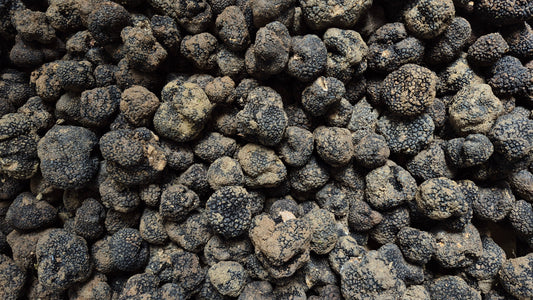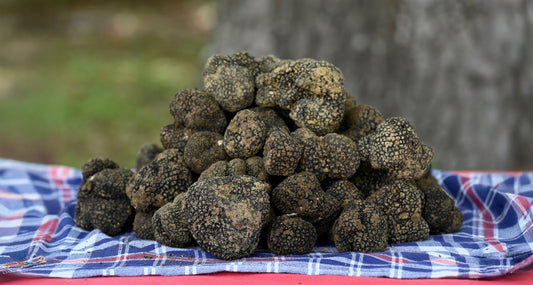

The truffle is much more than a prized ingredient: it is a symbol of luxury, mystery, and passion, capable of spanning centuries and captivating entire civilizations. But behind its refined fame also lie curious, bizarre, and fascinating anecdotes, which tell how this "diamond of the earth" has always exerted an irresistible charm over humankind.
1. The truffle according to the ancients: a gift from the gods?
Even the ancient Greeks and Romans were fascinated by truffles. Pliny the Elder called it a mystery of nature, while philosophers believed it was born from thunder, rain, and the heat of the sun, like a celestial gift.
The poet Juvenal recounted that the truffle grew where a bolt of lightning from Jupiter, the deity of the sky and fertility, had fallen. Perhaps for this reason, the Romans attributed powerful aphrodisiac properties to the truffle.
2. Popes were fond of them (but ate them in secret)
In the Middle Ages, the truffle ended up being associated with witchcraft, so much so that it was banned by some religious courts. Yet, it is said that some pontiffs were secretly fond of them, having them served "anonymously" under other names to avoid criticism.
It seems that Pope Gregory IV, in the 9th century, was an admirer of black truffles but had them delivered in disguise from Umbrian monasteries, so as not to cause scandal.
3. Catherine de' Medici and the arrival of truffles in France
It was Catherine de' Medici, a lover of Tuscan cuisine, who brought truffles to the French court in the 16th century. She introduced them to the banquets of the Parisian nobility, where they quickly became a symbol of prestige. From there, truffles conquered all of Europe, entering the hearts (and dishes) of kings and queens.
4. Napoleon and the truffle: a personal matter
Even Napoleon Bonaparte seems to have had a very clear opinion on truffles: he didn't like them. It is said that once, during a reception, he refused a truffle dish, saying:
“I don't trust something that grows underground without being seen.”
Another curious anecdote concerns Napoleon III, who, on the contrary, was very fond of them, so much so that he had them delivered every week from Périgord.
5. The truffle, a meteorological prophet
In some areas of Italy, until the nineteenth century, it was believed that truffles could predict the weather. Farmers observed the “truffle circles” – patches of greener grass in the fields – and maintained that if they appeared in abundance, a long and rainy autumn would follow. A kind of natural barometer, rooted in popular tradition.
A treasure of the earth, an endless story
Even today, truffles continue to inspire stories, legends, and passions, suspended between cuisine, myth, and culture. Every time we taste them, we don't just savor a prized ingredient, but hundreds of years of history, made of kings, poets, secrets, and prophecies.
And you? Which anecdote struck you the most?
If you want to experience the history of truffles up close, explore our selection of fresh and artisan products.